Bandwidth Is the New Address: What Nobody Tells You About Working Remotely on the Road

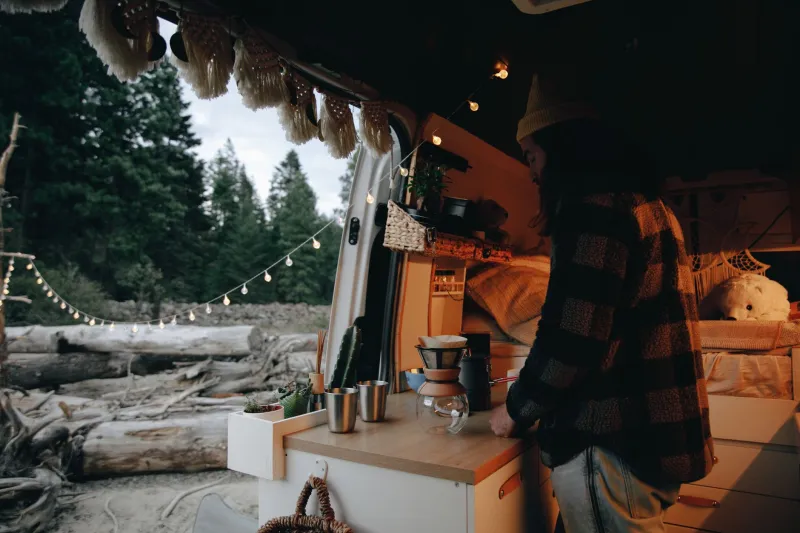
Photo by Photo by Aleh Tsikhanau on Unsplash on Unsplash
The Lie We All Bought Into
Let's be honest. At some point, every one of us got sold a version of nomadic life that involved effortlessly typing away in a sunlit café somewhere in the American Southwest, a cold brew sweating on the table, the world wide open. Nobody in that fantasy was squinting at a buffering Zoom call. Nobody was explaining to a client why the deliverable was late because the Airbnb in Asheville had "high-speed WiFi" that clocked in at 4 Mbps on a good day.
Here's the uncomfortable truth the freedom-lifestyle crowd doesn't always lead with: for modern digital nomads, reliable internet isn't a perk. It's the whole infrastructure. Your zip code is irrelevant. Your bandwidth is everything.
Speed Tests Are Now Part of Your Pre-Check-In Ritual
If you're remote working on the road and you haven't made Speedtest.net or Fast.com part of your booking research process, you're gambling with your income. Full stop.
Savvy nomads have developed a pre-arrival checklist that goes way beyond "does it have a kitchen." Before confirming any booking — whether it's a short-term rental, a hostel with a co-working vibe, or a campground that advertises WiFi — the real ones are doing their homework:
- Check the listing reviews specifically for WiFi mentions. Don't just look at the star rating. Search the reviews for words like "internet," "WiFi," "Zoom," or "video call." One honest review from a remote worker is worth more than five stars from a weekend vacationer who only needed to post a Story.
- Message the host directly. Ask for the router brand, the plan speed, and whether the connection is shared with other units. Hosts who have good internet are usually proud of it and will tell you immediately. Vague answers are a red flag.
- Use Workfrom or Nomad List. These platforms crowdsource connectivity data from actual remote workers who've been in the spots you're considering. They're not perfect, but they'll save you from rookie mistakes.
And once you arrive? Run that speed test before you unpack. If the numbers don't match what was advertised, you have documentation and leverage.
The Hidden Cost of Bad WiFi
People calculate the cost of nomadic life in rent savings and flight deals. What they don't always factor in is the economic damage of a week in a place where the internet is unreliable.
Think about it this way. If you lose a client because you couldn't reliably deliver work during a two-week stretch in a poorly connected rental, that's not just the cost of that rental — it's the potential lifetime value of that client relationship. If you burn a day's work driving around town hunting for a café with usable internet, that's a day of productivity you're not getting back. If you're paying for a backup mobile hotspot and the rental and a co-working day pass because nothing else worked, your "affordable" nomad month just got a lot more expensive.
The math gets ugly fast. And unlike a bad mattress, bad internet isn't something you can solve with a pillow from the closet.
Building Your Connectivity Stack
The nomads who've been doing this long enough don't rely on any single connection. They build what some in the community call a "connectivity stack" — layered backup options so that no single point of failure can wreck their workday.
Here's what a solid stack might look like in the US context:
Primary: The rental or co-working space WiFi. This is your first choice, and if it's good, you use it. Simple.
Secondary: A mobile hotspot device on a carrier with strong regional coverage for wherever you're roaming. T-Mobile tends to have broader rural coverage these days, but Verizon still wins in a lot of remote areas. Know your route and plan accordingly.
Tertiary: Your phone's personal hotspot as an emergency backup. It'll drain your battery and your data plan, but it'll get you through a client call in a pinch.
Some hardcore road workers also invest in a cellular router — devices like the Pepwave or the GL.iNet series — that can aggregate multiple connections simultaneously. It's a more expensive setup, but if your income depends on staying connected, it's a business expense, not a luxury.
Location Independence Is a Bandwidth Problem
There's a conversation worth having about who location independence actually serves right now. In theory, the ability to work from anywhere is the great equalizer — the thing that lets you choose your life on your own terms. In practice, it still skews toward people who can afford the backup plans, the equipment, and the occasional night in a hotel with reliable business-class internet when everything else falls apart.
Small towns across America are increasingly trying to attract remote workers with cheap rents and slow-paced living. Places like Tulsa, Topeka, and parts of rural Appalachia have even run incentive programs to lure in location-independent workers. But the cold reality is that many of these same places are still underserved by broadband infrastructure. The promise of "come live here cheaply" runs directly into the wall of "but can you actually work here reliably?"
Until the infrastructure catches up — and federal broadband expansion programs are crawling along — nomads have to do the due diligence themselves. The romantic notion of following your heart to the most beautiful place on the map has to get filtered through a very practical question: what's the download speed?
The Cafés and Co-Working Spots That Actually Deliver
If you're not ready to commit to a full connectivity stack setup, the co-working café scene in most mid-sized American cities has matured significantly. Places like Denver, Austin, Raleigh, and Boise now have dedicated co-working day-pass options that rival the big coastal cities — often at a fraction of the cost.
Look for spots that cater specifically to remote workers rather than just tolerating them. A place that offers a day pass, has ethernet ports at some desks, and enforces a quiet zone is signaling that it understands your needs. A coffee shop that lets you sit for six hours but has twelve people sharing a single router is not your friend, no matter how good the oat milk latte is.
Freedom Still Requires a Foundation
None of this is meant to scare you off the road. The nomadic life is real, it's sustainable, and it's genuinely as good as advertised — when you build it on honest foundations.
The wanderers who thrive long-term are the ones who stopped pretending that freedom means ignoring logistics. They're the ones who treat connectivity like the utility it actually is — something you plan for, budget for, and build redundancy around.
Roam free, absolutely. But roam with a speed test in your back pocket and a backup hotspot charged to 100%. The road is waiting. Your clients are on a deadline.