The Welcome Mat and the Lockout: Mapping America's War on the Addressless
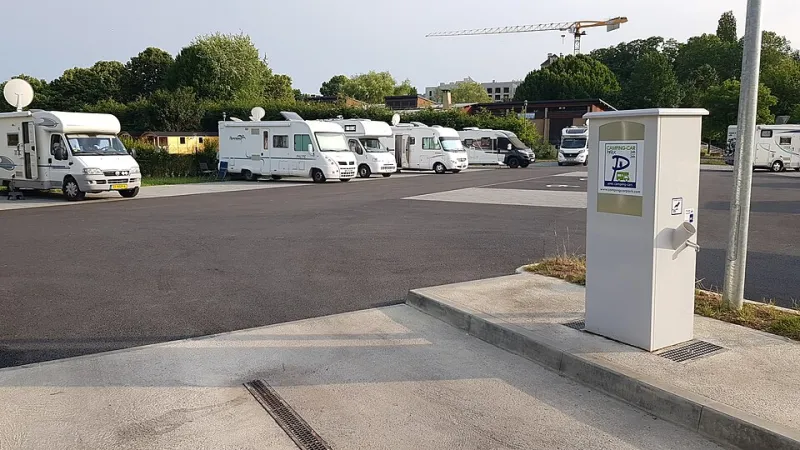
Photo: Elgaard, CC BY-SA 4.0, via Wikimedia Commons
Drive through enough American towns and you start reading the signs — the literal ones. No Overnight Parking. No RVs on This Street. Violators Will Be Towed.
Each one is a small civic decision about who belongs. And lately, the country has been split down the middle on that question.
The Crackdown Playbook
The pattern is consistent enough to have a template. A city gets popular with van dwellers — often because a viral video, a beautiful coastline, or simply good weather put it on the nomad map. Residents complain about the visual clutter. Council members cite safety, sanitation, or the evergreen phrase "quality of life." Then come the ordinances: overnight parking bans, oversized vehicle permits, distance requirements from schools and beaches and, eventually, everywhere.
San Diego spent years cycling through bans and revisions. Key West effectively outlawed living in your vehicle. A wave of midsize cities from Colorado to the Carolinas have quietly added "vehicle habitation" ordinances that make sleeping in your own parked car a code violation.
Here's the uncomfortable part: many of these laws don't distinguish between a wealthy traveler in a $200,000 Sprinter and a working person sleeping in a Corolla because rent ate their paycheck. The law sees a vehicle, not a person. And the vehicle is not welcome.
The Towns Doing It Differently
But the map has another side.
Some rural communities — hollowed out by decades of young people leaving — have discovered that nomads bring spending, skills, and life. Towns in the Kansas and Nebraska plains have actively recruited remote workers with relocation incentives. Quartzsite, Arizona, transforms from a dot on I-10 into a temporary city of thousands every winter, and the local economy depends on it. Gallup, New Mexico, passed an ordinance specifically permitting overnight parking for RVs after realizing travelers driving through were spending money at local businesses when they had a legal place to stop.
Then there's the private patchwork: businesses that let overnighters park in exchange for a purchase, churches opening lots, county land managed for dispersed camping. The wandering economy is real, and towns that engage with it are finding that a rig parked overnight means groceries, gas, a diner breakfast, and a tank of diesel bought locally.
What the Split Reveals
America has always had a contradictory relationship with mobility. We romanticize the open road in our movies and our advertising, then pass ordinances against the people actually on it.
Strip away the language about sanitation and sightlines, and much of the tension comes down to a single anxiety: people who can leave are harder to control, tax, and count. A fixed address makes a person legible to a town. A rolling one makes them a mystery.
But the welcoming towns have figured out something the crackdown towns haven't: mobility isn't a threat. It's a market. Every nomad is a customer, a volunteer, a pair of hands during harvest season, a story at the counter of the local café.
Know Before You Go — And Vote Where You Park
For travelers, the practical takeaway is boring but vital: check city ordinances before you park, use apps and community networks to verify current rules, and — this matters — spend locally where you're welcomed. The towns that roll out the mat deserve the reward.
And for everyone else: the next time a city council takes up an overnight parking ban, pay attention to who's in the room. The people being legislated against usually can't vote there. They can only leave.
How a town treats people without addresses tells you exactly how it defines community — whether belonging requires a deed, or just a friendly place to park for the night.