The Spot You Found Is a Loan, Not a Gift: A Blunt Guide to Boondocking Etiquette in 2026
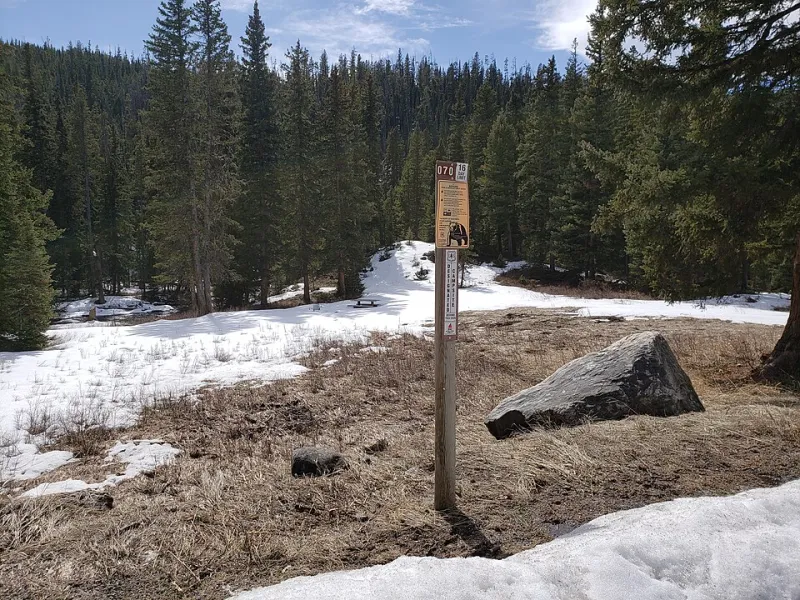
Photo: Forest Service - Northern Region, Public domain, via Wikimedia Commons
Somebody got to that spot before you. They packed out their trash, buried nothing that shouldn't be buried, put out their fire cold to the touch, and left a pullout that looked like nobody had ever been there.
That's why you got to find it clean.
This is not a lecture about loving nature. You already love nature or you wouldn't be reading a nomad blog. This is about something less romantic: access. Every trashed dispersed site, every generator running at midnight, every pile of toilet paper behind a juniper bush becomes an argument for the people who want to close these places permanently. And in 2026, those people are winning more arguments than they used to.
So here's the field guide. Blunt, because we're past the point where gentle works.
The stay limit is a ceiling, not a goal
Fourteen days means fourteen days, and it usually means fourteen days in a defined area, not fourteen days per pullout with a two-mile shuffle in between. Rangers know that trick. Read the specific forest order or BLM notice for the district you're in, because they genuinely differ, and some are now seven days, or three, or day-use only.
Leaving doesn't just reset the clock. It lets the ground recover. Compaction is real, and a spot that gets hammered for a month straight turns into a mud pit that never comes back.
Generators: the sound you make is the reputation you leave
If your generator can be heard from another campsite, it's too loud for that campsite. That's the whole rule. Everything else is commentary.
Practical version: run it in the middle of the day, never before 8 a.m., never after quiet hours, never in a spot where sound carries across open water or down a canyon. If you're running a generator for eight hours a day, you don't have a boondocking setup — you have a house with extra steps, and you should probably take it to a paid spot with hookups.
Solar and lithium have gotten cheap enough that the generator-guilt conversation is mostly a choice now. Make the better one.
Waste: pack it out means all of it
Gray water is not "basically water." It's soap, food particles, and grease, and it attracts animals and grows algae. Use a basin and dump it in a proper drain, or carry it out.
Human waste is the issue that actually gets land closed. In high-use, arid, or alpine areas, a wag bag is not optional — it's the price of admission. Where catholes are permitted, they're six to eight inches deep, well away from water, trails, and campsites, and you pack out the paper. Yes, the paper. No, burying it doesn't count as packing it out.
And if you see someone else's mess at a site you're using — a stray wrapper, a burned can, a sad pile of paper — pick it up. Not because it's yours. Because it's the site's, and the site can't do it itself.
The fire ring you didn't build
Use existing rings. Don't build new ones, don't expand old ones, don't ring a fire with rocks you pulled out of a fragile bank. Check the fire restrictions before you strike a match — they change weekly and they are not suggestions.
And when you leave, the ashes should be cold enough to put your hand in. Not warm. Cold. Drown it, stir it, drown it again. Every summer there's a wildfire with a dispersed campsite at the origin, and every one of those fires makes the next round of closures easier to justify.
Geotags are a wrecking ball
This one hurts because we all love sharing. But pinning exact coordinates on a small, fragile, beautiful spot is how that spot gets destroyed inside two seasons. Post the view, not the pin. Talk about the region, not the pullout. If someone DMs you for coordinates, ask them how they treat a place before you answer.
Arrive late, leave early, leave nothing
Show up close to dark so you're not scouting through someone's dinner. Leave early enough that you're not idling while your neighbor sleeps. Do a walk-around before you drive off — the classic mistake is driving away leaving a leveling block, a chair, or a black water tote behind.
And leave the spot looking like a place you'd be thrilled to pull into tomorrow.
The neighbor test
Before you settle in, ask yourself: if someone parked exactly like this fifty feet from me, would I be annoyed? If the answer is yes, adjust.
That's most of the etiquette in one question. Space between rigs. Music you can only hear inside your own vehicle. Dogs on leash and quiet. Porch lights that don't light up the whole basin.
Self-policing is the only enforcement we've got
Nobody's coming to teach the new wave how to do this. There's no orientation, no license, no test. Which means the culture gets set by whoever's already out there — and that's us.
So be the annoying person who says something kindly. Hand a new arrival a trash bag. Mention the quiet hours. Point them toward the dump station. It's awkward for about nine seconds and then it's just neighbors talking.
The land doesn't owe us a spot. We're borrowing it, on terms set by people who will absolutely close the gate if we blow it.
Earn the right to stay. Then stay a little quieter than you think you need to.