The Freer You Try to Be, the More Trapped You Feel: The Nomad Contradiction Nobody Warns You About
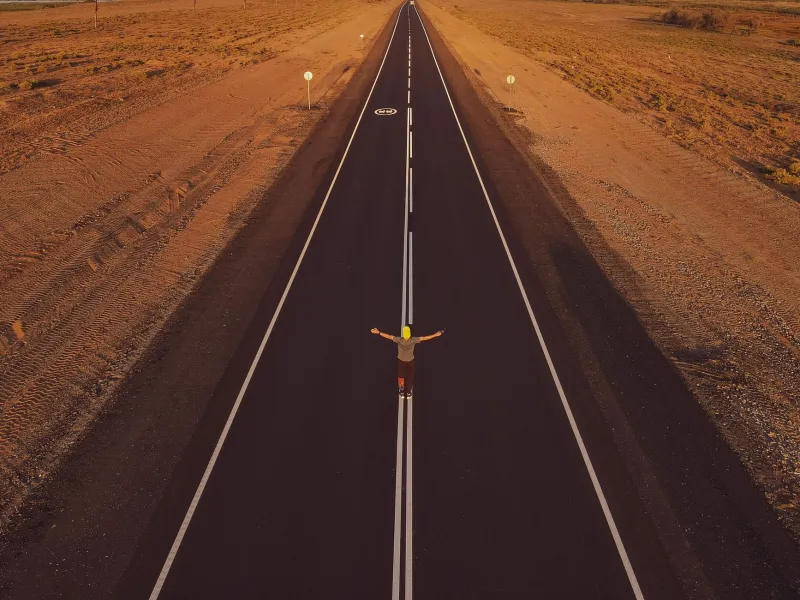
Somewhere around month seven on the road, a funny thing happens to a lot of nomads. They're sitting in a coffee shop in Asheville or a campground outside Sedona, technically answerable to no one, technically free to leave at any moment — and they feel completely, inexplicably stuck.
Not stuck in a place. Stuck in a pattern.
The lease is gone. The furniture is sold. The hometown obligations are a blurry memory. And yet something invisible is running the show. Something that looks suspiciously like the same anxiety they were trying to outrun when they left.
This is the nomad paradox, and it's one of the most honest conversations the community rarely has out loud.
You Can't Run Toward Freedom If You're Running Away From Something Else
Let's get into the uncomfortable part first. A lot of people — and no judgment here, because this is human — don't leave their old life for something. They leave it from something. A dead-end job, a suffocating relationship, a city that stopped feeling like home, a version of themselves they couldn't stand anymore.
And the road is genuinely good medicine for that. Movement creates perspective. Distance creates clarity. A few thousand miles of highway has a way of rearranging your interior furniture in ways therapy sometimes can't.
But here's where it gets tricky. When your primary motivation is escape, freedom becomes a moving target. Every time you settle into a place for more than a few weeks, that old restlessness creeps back in. So you leave again. And again. The leaving itself becomes the addiction — not the arriving, not the exploring, not the connecting. Just the act of cutting loose.
Before long, you're not a free spirit. You're a person who's terrified of standing still.
The Invisible Rules of Radical Freedom
Here's something that'll sting a little: the nomadic community, for all its talk of living without rules, has a lot of rules.
Don't stay anywhere too long or you're "settling." Don't get too attached to people or you're "clingy." Don't express that you miss your family because that's "not the vibe." Don't admit that you'd actually really love a kitchen you could cook in for more than three days.
These aren't written down anywhere, but they're enforced — mostly by the internal voice you've developed after consuming enough van life content to fill a small library. The freedom aesthetic becomes its own kind of conformity. And suddenly you're not making choices based on what you actually want. You're making choices based on what a free person is supposed to want.
That's not liberation. That's just a different dress code.
Anchors Aren't Always What's Holding You Down
The word "anchor" has gotten a bad reputation in nomadic circles. It's become synonymous with weight, obligation, limitation. Something to be shed.
But sailors don't carry anchors because they hate moving. They carry them because sometimes you need to stop and not drift. Because stillness, chosen deliberately, is its own kind of power.
The people who seem genuinely, sustainably free on the road — not just performing freedom for an Instagram grid — tend to have a few anchors they've chosen consciously. A person they call every Sunday. A creative practice they protect no matter where they are. A community they return to, even if just digitally. A set of values that doesn't shift based on geography.
These aren't chains. They're the things that make the movement meaningful.
Without them, you're not wandering. You're just... spinning.
The Psychology of Perpetual Motion
Psychologists have a term for it: experiential avoidance. It's the tendency to flee internal discomfort by changing external circumstances. And while it works short-term — a new place really does create a brief reset — it doesn't address whatever's generating the discomfort in the first place.
The irony is that the more you run, the more practiced you become at running, and the lower your tolerance gets for sitting with hard feelings. Which means you need to move more to get the same relief. Which means you're now, functionally, dependent on motion the same way someone else is dependent on a drink at the end of the day.
None of this means nomadic life is a symptom of dysfunction. It absolutely is not. But it does mean that the version of nomadic life that's built entirely around detachment — from places, people, commitments, routines — can quietly become its own trap.
True freedom isn't the absence of attachment. It's the ability to choose your attachments deliberately.
What Actually Lighter Feels Like
The nomads who seem to carry the least weight aren't the ones who've cut everything. They're the ones who've gotten honest about what they actually need versus what they were told they should want.
Maybe they maintain a storage unit in Denver with a few things that matter to them — and they've stopped apologizing for it. Maybe they have a standing monthly call with a friend from college who has a mortgage and two kids, and that friendship is one of the most grounding things in their life. Maybe they've admitted, privately or publicly, that they'd like to spend three months in one place next year — not because they're giving up, but because they're curious what that version of themselves feels like.
That's not selling out. That's evolving.
The most radical thing a nomad can do right now, honestly, might be to stop performing freedom and start practicing it. And practicing it means getting honest about the difference between what genuinely lights you up and what you're doing out of fear — fear of commitment, fear of being ordinary, fear of needing people.
The Road Doesn't Care About Your Identity
Here's the thing about the open road that nobody puts on a bumper sticker: it doesn't care who you are. It doesn't reward you for how many cities you've passed through or how few possessions you own. It doesn't validate your freedom score.
It just keeps going. And at some point, you have to decide what you keep going toward.
The nomad paradox resolves itself — not by settling down, not by giving up the wandering life — but by getting clear on why you're moving. When the answer shifts from away from to toward, something changes. The anxiety quiets a little. The need to constantly prove your freedom to yourself and everyone watching your stories starts to loosen its grip.
You can still leave whenever you want. You just stop needing to.