Go When Everyone Else Leaves: The Quiet-Season Strategy That's Changing How Nomads Move
Picture Bar Harbor, Maine in August. Lobster rolls for $28. Parking spots that don't exist. Airbnbs running $400 a night for a room that smells like damp wood and regret. Trails so packed you're basically hiking in a single-file line with strangers from New Jersey.
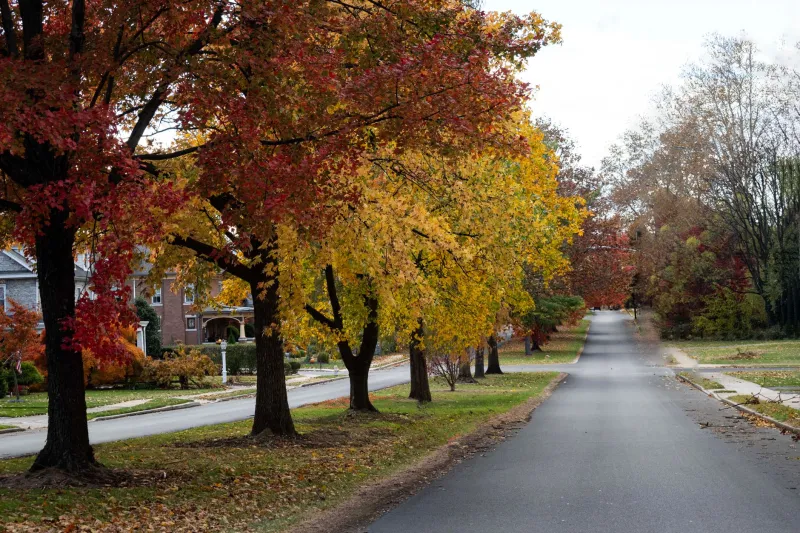
Now picture Bar Harbor in November. Crisp air that actually wakes you up. Rents that drop by more than half. Locals who are visibly relieved that they can go to the grocery store without navigating a stroller traffic jam. And a version of that coastline that most people — even people who've been to Bar Harbor — have never actually seen.
This is the quiet-season play. And nomads who've figured it out aren't just saving money — they're accessing a completely different version of America.
The Economics Are Almost Embarrassingly Good
Let's talk numbers, because this is where the strategy gets hard to argue with.
In tourist-heavy towns across the US — think Sedona, Arizona; Gatlinburg, Tennessee; Cannon Beach, Oregon; Lake Placid, New York — the rental market basically bifurcates. Peak season brings short-term vacation pricing that makes big-city rents look reasonable. Off-season brings something else entirely: landlords who need tenants, property managers trying to cover carrying costs, and locals renting out spaces that sit empty half the year anyway.
Nomads who time their arrivals for shoulder or off-season routinely report paying 40 to 60 percent less than peak-season rates for the same quality of housing. Monthly furnished rentals that would be impossible to find in July suddenly materialize in October. Campgrounds with full hookups drop their rates and empty out. The economics flip almost overnight.
And it's not just housing. Restaurants that were slammed all summer are suddenly happy to see you. Local businesses that couldn't spare five minutes during tourist season are now genuinely delighted to have a conversation. The whole financial ecosystem of a tourist town recalibrates when the visitors leave, and if you're positioned as a local-adjacent presence rather than a day-tripper, you benefit from that recalibration in ways that go way beyond cheap rent.
The Real Prize Isn't the Discount — It's the Access
Here's what the money doesn't fully capture: off-season towns let you in in a way that peak-season towns never will.
When a place is flooded with tourists, locals go into a kind of defensive mode. They're polite, sure — tourism pays the bills — but they're not open. They're managing crowds. They're tired. They're counting down the days until fall.
But arrive after Labor Day in a beach town, or after ski season ends in a mountain town, and you'll find something genuinely different. People have time again. They're curious about who's still here, and why. You become interesting by default — because most people left, and you stayed (or arrived). That curiosity is the seed of real community integration, the kind that's basically impossible when you're one of ten thousand visitors.
Seasoned nomads talk about this effect constantly. Show up in Moab, Utah in late November and you'll meet the actual Moab — the climbers, the desert rats, the people who chose that place deliberately and know every canyon by name. Show up in July and you're just another person in REI gear trying to find parking at Arches.
Mapping the Counter-Seasonal Circuit
The smartest nomads don't just stumble into off-season towns. They map a counter-seasonal circuit — a deliberate rotation of destinations timed to arrive after the rush and leave before the next one begins.
Some rough examples worth knowing:
Coastal Maine and Cape Cod — September through May. Brutal winters, yes, but September and October are arguably the most beautiful months on the eastern seaboard. Affordable, quiet, and stunning.
Southwest desert towns (Sedona, Taos, Santa Fe) — Summer is actually the slow season in many high-desert spots because of heat. Late May through early September can be surprisingly uncrowded and significantly cheaper.
Mountain towns in Colorado, Wyoming, and Montana — The shoulder seasons between ski season and summer hiking season (roughly April-May and October-November) are the sweet spot. Locals call it "mud season" and they're not wrong, but the vibe is unmatched.
Florida Gulf Coast — Summer is off-season for a reason (it's hot and humid), but for nomads used to heat, June through August offers dramatically lower prices and a version of places like Apalachicola or Seaside that's genuinely local.
Pacific Northwest coast — The rain doesn't actually bother most people as much as they think it will, and places like Astoria, Oregon or the Olympic Peninsula in winter are hauntingly beautiful and almost entirely tourist-free.
The pattern is simple: go where the crowds just left, or haven't arrived yet. Stay long enough to matter to a place.
The Friction Points (Because It's Not All Cheap Rent and Vibes)
Let's be real about the tradeoffs, because pretending there aren't any would be doing you a disservice.
Off-season towns can be quiet to the point of isolating. Some restaurants close entirely. Entertainment options shrink. If you're someone who needs a lot of social stimulation, a November stint in a beach town might feel like a slow-motion sensory deprivation experiment.
Weather is the other obvious one. Off-season often means off-season weather, and depending on your setup — van, RV, rented room — that can range from cozy to genuinely difficult. Heating costs, road conditions, and limited outdoor activity options are real considerations.
And some towns don't just slow down in the off-season — they effectively shut down. It's worth researching before you commit to a month somewhere, because a town with three open restaurants and no functional co-working space might test your patience in ways cheap rent doesn't fully compensate for.
The Philosophy Underneath the Strategy
Beyond the logistics, there's something philosophically satisfying about the counter-seasonal approach that resonates with what the nomadic lifestyle is actually about.
It's a rejection of the tourist's relationship with a place — the idea that a destination exists for your consumption at its most performative, most curated, most crowded moment. It's a choice to see places as they actually are, not as they present themselves when they're trying to impress.
There's humility in that. And there's a kind of intimacy with America that most people — even people who travel constantly — never quite reach.
The off-season nomad isn't chasing the highlight reel. They're staying for the credits. And more often than not, that's where the real story lives.