Thirty, Restless, and Finally Ready: Why Your Second Act Belongs on the Road

There's a story we've been sold about wanderlust. It goes something like this: you're twenty-two, freshly graduated, maybe a little broke, and you throw a backpack over one shoulder and figure it out as you go. That version of nomadic life gets all the Instagram real estate. It gets the documentaries and the Reddit threads and the breathless blog posts.
But here's what that story leaves out: a lot of people who are actually thriving on the road right now? They didn't start until their thirties.
And honestly, that timing might not be a consolation prize. It might be a superpower.
The Myth That Wanderlust Has an Expiration Date
We've absorbed this cultural idea that freedom is something you grab before life gets complicated — before the career, before the mortgage, before you've got a 401(k) you're actually contributing to. The message is subtle but persistent: if you didn't go when you were young and unattached, you missed your window.
That's not just wrong. It's backwards.
The people who bolt at twenty-two often spend the first year of nomadic life figuring out basic adulting on the road — managing money under pressure, navigating conflict, learning how to work without someone standing over them. There's nothing wrong with that. But there's also nothing romantic about doing it broke and directionless in a hostel in Southeast Asia.
Meanwhile, the thirty-five-year-old who finally books the one-way ticket? She already knows how to do all of that. She's just choosing to do it somewhere more interesting.
What You Actually Bring to the Table After a Decade of "Real Life"
Let's be honest about what a decade of working, adulting, and grinding actually gives you — because it's more than you think.
Savings that mean something. The math is different at thirty-five. You've had time to actually accumulate a financial cushion. Even a modest emergency fund feels like runway when you're not paying rent in a high cost-of-living city. Nomadic life isn't free, but it's a hell of a lot more manageable when you're not starting from zero.
Skills that travel with you. A decade in project management, marketing, UX design, finance, or healthcare doesn't evaporate when you leave your office. It becomes your remote work portfolio. The thirty-something nomad isn't trying to convince a client to take a chance on them — they've got receipts. A track record. References who actually know their work.
Clarity about what you actually want. This one's underrated. At twenty-two, you might think you want freedom, but you don't yet know what freedom feels like in your body. You haven't had enough contrast. By your thirties, you've lived inside enough structures — bad jobs, mediocre relationships, cities that never quite fit — to know exactly what you're walking away from and why. That clarity changes everything about how you move.
The Career Pivot That Isn't Actually a Pivot
One of the biggest fears people carry into their thirties is that going nomadic means throwing away everything they've built. And it's understandable — you've put real time and real effort into a career, and the idea of torching it feels reckless.
But most of the thirty-something nomads I've talked to aren't abandoning their careers. They're relocating them.
Take Marcus, a former financial analyst from Chicago who spent eleven years climbing a ladder he eventually realized he didn't actually want to be on. At thirty-four, he didn't quit finance — he went freelance, locked down two steady consulting clients, and spent the next eighteen months moving between Medellín, Lisbon, and a string of smaller cities in Mexico. He's earning less than he did at his peak corporate salary. He also hasn't set an alarm clock in two years and has genuinely no interest in going back.
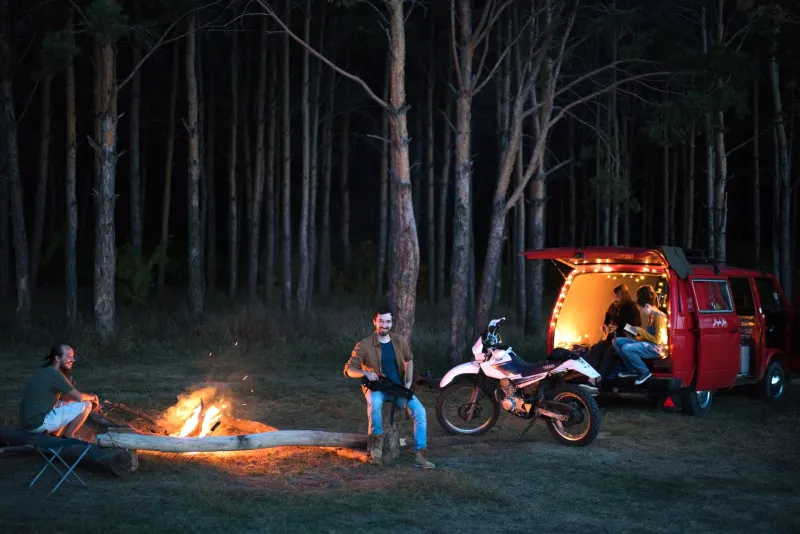
Or Priya, a UX designer who left a well-paying job in San Francisco at thirty-one, not because she hated her work but because she hated the treadmill. She built out her freelance client base over six months before she left, gave notice on her apartment, and has since worked from Oaxaca, Tbilisi, and a van she bought in Portland. Her income is comparable. Her life looks nothing like it did.
These aren't people who gave up. They're people who got strategic.
The Relationship Question Nobody Wants to Answer
Let's not skip over the hard part. Your thirties often come loaded with relational complexity — partners, maybe kids, aging parents, friendships that have deep roots. And the nomadic fantasy can feel like it requires you to choose between a life in motion and the people you love.
Sometimes that tension is real, and it deserves honest reckoning. But it's also more navigable than it looks from the outside.
Some people go nomadic solo after a relationship ends and find that the road gives them space to figure out who they are outside of a partnership. Others go with a partner who's equally ready for the reset — and find that shared adventure rebuilds something that years of routine had quietly eroded. Some maintain deep, intentional friendships across time zones in ways that feel more meaningful than the surface-level proximity they had before.
None of these paths are simple. But none of them require you to become someone who doesn't care about connection. If anything, nomadic life in your thirties tends to sharpen your sense of who actually matters and why.
Already Knowing Who You Are Is the Whole Advantage
Here's the thing that doesn't get said enough: the hardest part of nomadic life isn't the logistics. It's the identity work. When you remove all the external scaffolding — the job title, the zip code, the social circle, the routines — you're left with yourself. And if you don't know who that is, that can be terrifying.
At twenty-two, you're still assembling that person. At thirty-five, you've got a working draft. A pretty solid one, actually. You know your deal-breakers. You know what genuinely lights you up versus what you've been performing. You know how you handle stress and boredom and loneliness and unexpected beauty.
That self-knowledge isn't a reason to stay put. It's your best possible travel companion.
The Second Act Is the Real One
Wandering in your thirties isn't a delayed version of something you should have done earlier. It's a different thing entirely — more intentional, more grounded, and often more sustainable. You're not running away from a life you haven't built yet. You're choosing to build it differently, with full awareness of what you're trading and what you're gaining.
The road doesn't care how old you are when you finally show up. It just cares that you show up.
So if you've been sitting with that restless feeling — that low hum of there has to be more than this — and you've been waiting for permission from someone younger than you to make a move, consider this it.
Your second act is waiting. And it's got better judgment than your first one ever did.