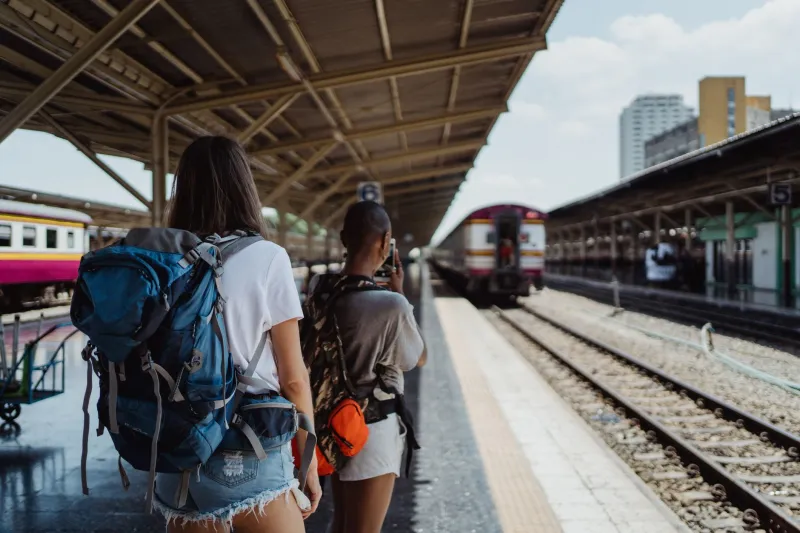
They Felt Like Forever — But Travel Friends Were Never Meant to Be: A Love Letter to the Ones Who Drifted
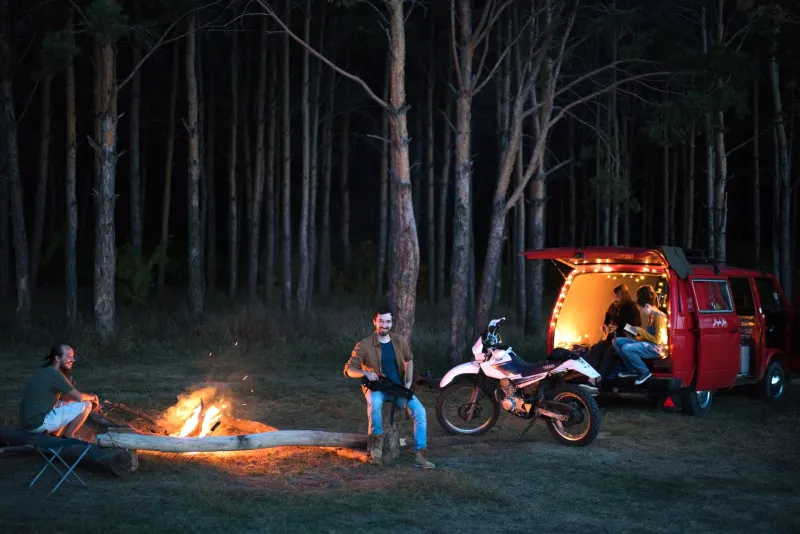
The Hostel Hallway at 2 a.m. Changed Everything
You met them somewhere unremarkable — a shared kitchen in Asheville, a campsite outside Moab, a dive bar in New Orleans where neither of you meant to stay past one drink. Within 48 hours, you knew their childhood trauma, their ex's name, and exactly how they take their coffee. Within a week, you were finishing each other's sentences.
And then one of you got back in the van. Or booked a flight. Or took a seasonal gig three states away.
Now you text on birthdays if you're lucky, double-tap their Instagram Stories, and feel a dull, confusing ache every time you see a photo of the place you shared. What happened? Were you wrong about the connection? Was it all just circumstance?
Short answer: no. Longer answer: welcome to the specific emotional terrain of nomadic friendship, where everything is real and nothing is permanent, and somehow both of those things can be true at the same time.
Why Road Friendships Hit Different
There's actual psychology behind why people bond faster and more intensely when they're traveling. Researchers call it the "fast friendship" effect — when people are removed from their routines, stripped of their usual social armor, and thrown into novel experiences together, they tend to self-disclose at a rate that would take months in a settled context.
Add to that the fact that nomads are, by nature, people who've already opted out of conventional life. When you meet someone else who's made the same choice, there's an instant shorthand. You don't have to explain why you don't have a five-year plan or why you'd rather sleep in your car than sign another lease. They already get it. That shared language creates intimacy at warp speed.
The connection is real. Don't let anyone tell you it wasn't.
But here's the other side of that coin: a huge part of what makes road friendships feel so alive is context. The shared meals cooked on camp stoves, the long drives with no particular destination, the way a place can make two strangers feel like co-conspirators. When the context disappears, the friendship doesn't automatically travel with it.
The Shelf Life Isn't a Flaw in the Design
We're conditioned — especially in American culture, where "lifelong friends" are treated as the gold standard — to see any friendship that ends as a friendship that failed. But that framing is doing you a disservice.
Some connections are designed to be season-long, not lifetime-long. They serve a specific purpose: they hold you together during a particular stretch of road, they challenge you to grow in ways your old circle never would have, they show you a version of yourself you didn't know existed. And then they complete that job.
Letting a travel friendship fade isn't betrayal. It's just the natural arc of a relationship that was always more comet than constellation — brilliant, fast, unforgettable, and not built to orbit the same point forever.
The grief is still real, though. Don't skip it.
How to Know Which Friendships Are Worth the Long-Distance Work
Not every road friendship has an expiration date. Some of them are genuinely built to last — they just require a different kind of maintenance than proximity-based friendships. Here's how to tell the difference.
You talk about more than the trip. If your conversations have evolved past nostalgia for the place where you met and into each other's actual lives — current struggles, future dreams, real-time emotional support — that's a friendship with legs.
The effort feels mutual without scorekeeping. Long-distance anything dies when one person is always the one reaching out. If you find yourself tracking who texted last, that's data.
You can pick up without a recap. The friendships worth maintaining are the ones where six months of silence doesn't require an apology tour. You just... reconnect. Like no time passed. That kind of ease is rare and worth protecting.
You've seen each other outside the magic. If you've managed to meet up again somewhere ordinary — not the peak travel moment where everything was golden — and you still genuinely like each other, that's a friendship that can survive real life.
Practical Ways to Stay Connected Without the Guilt Spiral
Here's the thing nobody tells you: maintaining nomadic friendships doesn't require constant contact. It requires intentional contact. There's a difference.
Voice memos over text. Sending a 90-second voice note while you're driving through the desert feels infinitely more intimate than a paragraph typed on a phone. It's low-effort and high-impact, and it keeps the real texture of a person's voice in your life.
Shared playlists or photo albums. Some friendships live better in a shared Spotify playlist that you both add to, or a Google album where you drop photos without commentary. It's a way of saying I'm still thinking of you without the pressure of a full conversation.
Plan the next overlap, however vague. "I'm going to be in the Pacific Northwest sometime this summer" is enough. Nomads are used to flexible plans. The intention matters more than the calendar.
Let go of the guilt when drift happens naturally. This one's the hardest. You're going to lose touch with people you genuinely loved. That's not a moral failing. It's the cost of a life built on motion, and it's one most nomads silently pay over and over again.
A Different Kind of Loyalty
Somewhere along the way, the nomadic community developed its own unspoken code around friendship — one that looks less like the forever-and-always model and more like an open hand. You hold the connection while it's there. You don't squeeze so hard you suffocate it. And when it slips away, you wish it well.
That's not coldness. That's actually a pretty evolved way to love people.
The friends you made on the road shaped you. The ones who drifted didn't love you less, and you didn't love them wrong. You just met at a crossroads instead of a destination, and crossroads, by definition, are places where people go different directions.
Carry them with you anyway — in the songs you can't skip, the places you can't forget, and the version of yourself they helped you become. That's where the real shelf life is. Not in the texts. In you.
And if one of them reads this and thinks of you? Maybe send that voice memo.