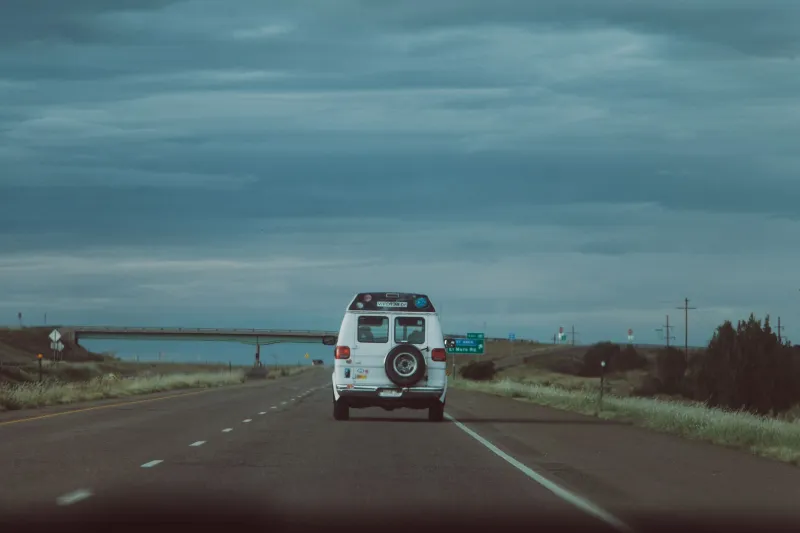
Van Life Lied to You — And That's Exactly Why We Still Love It
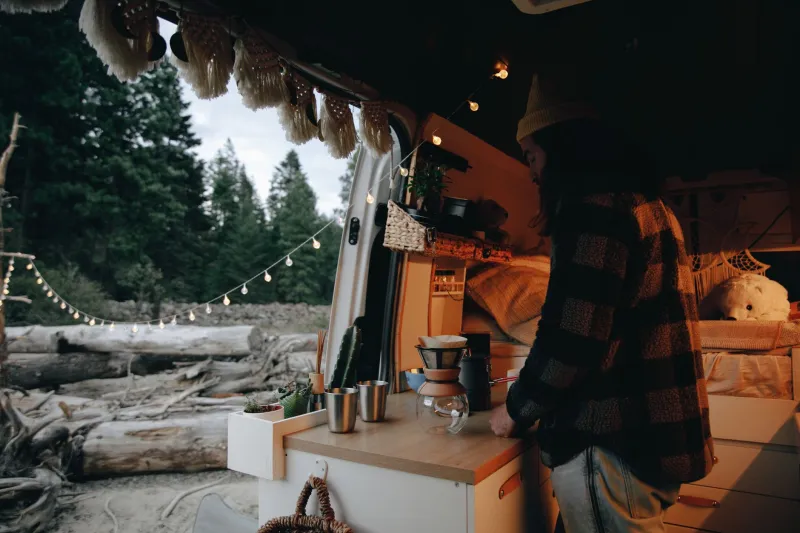
Somewhere between the 47th perfectly framed Sprinter van photo and the influencer couple explaining how they "work remotely and live their best life," something got lost. The mud. The mold. The three-day stretch without a real shower. The night you cried in a Walmart parking lot in Amarillo, Texas because your alternator died and your laptop battery was at 4%.
Van life is real, and it's beautiful, and it's also kind of a disaster sometimes. And honestly? That tension is exactly what makes it worth talking about.
We reached out to people who have actually been living mobile in America — not for a summer, not for a "sabbatical" — but for years. What they told us was funny, painful, unglamorous, and ultimately, deeply honest. This is the version of the story that doesn't make the highlight reel.
The Parking Problem Is a Full-Time Job
Ask any long-term van dweller what their biggest daily stressor is, and almost universally, the answer isn't money or loneliness or even mechanical issues. It's parking.
"People think you just pull over wherever and sleep," says Marcus, who has been living in a converted Ford Transit out of Denver for going on three years. "The reality is I spend sometimes an hour every night figuring out where I'm legally allowed to exist. It's exhausting in a way that's hard to explain."
In cities, overnight vehicle dwelling is increasingly criminalized. Los Angeles, San Francisco, Denver, Seattle — many major metros have ordinances that effectively make it illegal to sleep in your vehicle on public streets. Enforcement is inconsistent, which almost makes it worse, because you never fully know. You learn the spots. You move constantly. You develop a sixth sense for which neighborhoods will send a cop to knock on your window at 2 a.m.
BLM land and national forests offer relief — dispersed camping on public land is legal and often spectacular. But it requires planning, and it keeps you tethered to certain geographies. The nomadic freedom the internet sells you is real, but it comes with a homework assignment every single evening.
Breakdowns Don't Care About Your Itinerary
Jasmine bought her 2008 Dodge Sprinter for $14,000 after saving for two years. She converted it herself over six months, watching YouTube tutorials and calling her dad for moral support. She hit the road in March. By May, she'd spent $4,200 on repairs.
"The Sprinter community online makes it sound like if you do your research and buy a good van, you'll be fine," she says. "But these are old vehicles living hard lives. Things break. And when they break on the road, in a town you've never heard of, the markup at the local shop is brutal."
The financial reality of mechanical life is one of the most underrepresented parts of the van life narrative. Most experienced nomads recommend keeping a dedicated emergency fund of at least $3,000–$5,000 specifically for vehicle issues — separate from your general savings. They also recommend learning basic mechanics before you leave, not after.
"I can now replace my own water pump, bleed my brakes, and diagnose an electrical short," Jasmine says. "I didn't know any of that two years ago. I learned it the hard way, in parking lots, covered in grease, crying a little."
She says this with a laugh. That laugh is important.
The Loneliness Nobody Posts About
Here's the thing about van life content: it skews heavily toward couples. Two people in a van is a relationship stress-test and a logistical challenge, sure, but it's also built-in company. Solo van life is a different emotional landscape entirely.
Derek has been solo on the road for eighteen months, currently somewhere in the Ozarks as we speak. He's thoughtful and measured when he talks about isolation — not dramatic, just honest.
"There are weeks where I go days without a real conversation," he says. "Not surface-level stuff at a coffee shop, but an actual conversation where someone knows my name and asks how I'm doing. That hits different when it's been a while."
He's developed strategies: co-working spaces for human contact, van life meetups (they exist, and they're genuinely wonderful), and being intentional about staying in one place long enough to build temporary community. But he's clear that the loneliness is real, and that anyone who tells you otherwise is either an extrovert with unusual social superpowers or not being fully honest.
"Instagram van life is always about the landscape," he says. "Nobody posts a picture of themselves eating dinner alone in a parking lot for the fourth night in a row. But that's Tuesday for me sometimes. And it's okay. But it's real."
Health on the Road: The Unglamorous Truth
Healthcare in America is complicated enough when you have a fixed address. When you're nomadic, it becomes a puzzle with missing pieces.
Finding in-network providers across state lines is genuinely difficult. Dental care, therapy, specialist appointments — all of these require either careful planning or cash pay. Several long-term nomads we spoke with have shifted to Health Sharing Ministries or high-deductible plans paired with HSAs, but acknowledged these come with real limitations.
Mental health care, in particular, is a gap that the community doesn't discuss enough. Telehealth has been a genuine game-changer — apps like Headway or Alma connect people with licensed therapists who work over video — but access still depends on state licensure, and not every therapist is licensed in every state you'll pass through.
Physical health has its own quirks. Van life tends to mean more walking, more outdoor activity, less processed food (when you're cooking in a tiny space, elaborate meals become a project). Many nomads report feeling physically better on the road. But chronic conditions, prescription management, and anything requiring regular monitoring require serious logistical planning before departure.
So Why Do People Stay?
We asked everyone we talked to the same question: knowing everything you know now, would you still have done it?
Every single one of them said yes. Without hesitation.
Not because it's easier than apartment life, or cheaper, or more Instagram-worthy. But because something happens to a person when they shed the weight of a fixed address and start moving through the world on their own terms. It's hard to articulate without sounding like a bumper sticker, but the people who've lived it don't really need the words — they just nod when you try.
"I know myself in a way I never did before," Jasmine says. "I know what I actually need versus what I thought I needed. I know how to fix things. I know how to ask for help. I know how to be alone without being lonely. Those are things I couldn't have learned any other way."
Marcus puts it differently. "The hard parts aren't bugs in the system," he says. "They're the system. The difficulty is the point. You're not supposed to have it all figured out. That's the whole deal."
The Honest Invitation
At Gypsy BK, we're not here to sell you a fantasy. We're here to celebrate a life lived on the edges of convention — messy, mobile, and fully, stubbornly alive. The van life that matters isn't the one with the golden hour and the fairy lights. It's the one with the dead alternator and the Walmart parking lot and the decision to get up the next morning and keep going anyway.
That version? That's the one worth chasing.