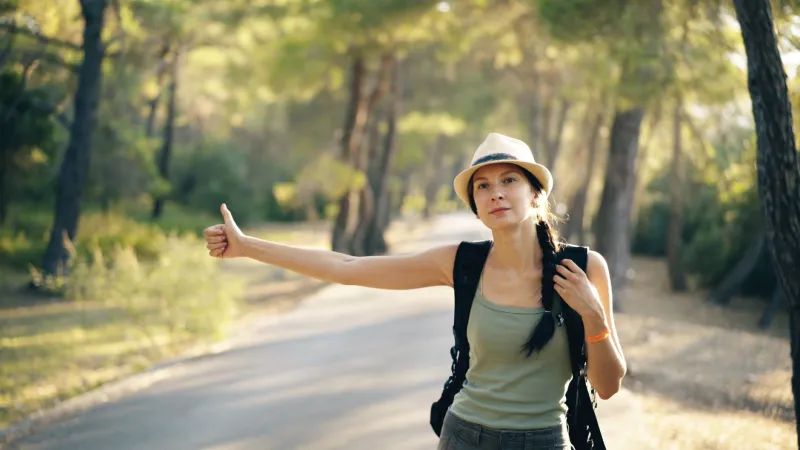
When Stopping Feels Like Falling: The Hidden Fear Behind the Nomad's Need to Keep Moving
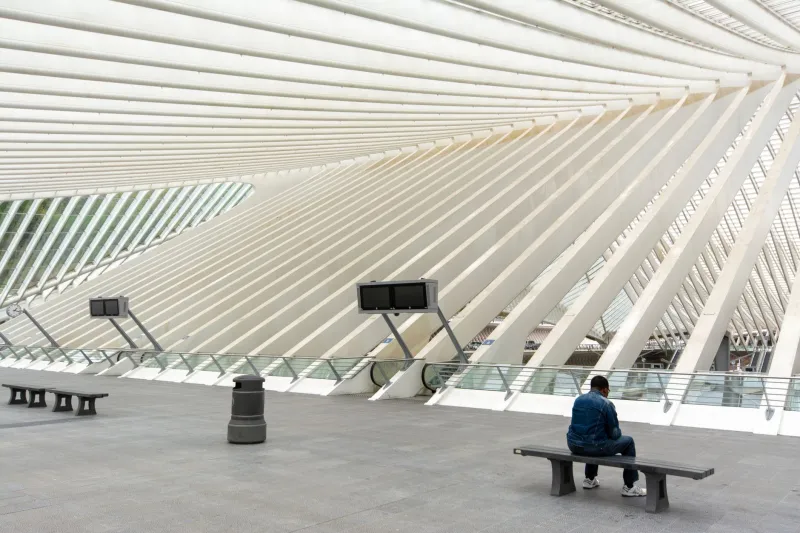
There's a specific kind of dread that hits somewhere around day four of being in the same place. You've unpacked your bag — actually unpacked it, not just dug through it on the floor. You know which coffee shop has the best Wi-Fi. You've stopped getting lost on the way to the grocery store. And instead of feeling settled, you feel vaguely sick.
Not sick like something's wrong. Sick like something's ending.
If you've been living nomadically for any stretch of time, you probably know this feeling. Maybe you've laughed it off, chalked it up to wanderlust, told yourself you're just not built for staying still. But there's a version of this discomfort that deserves more than a shrug — because it's not always wanderlust talking. Sometimes it's anxiety wearing wanderlust's clothes.
The Brain on Novelty
Here's the thing about constant movement: it's genuinely intoxicating, and not in a metaphorical way. New environments trigger dopamine. New faces, new streets, new smells — your nervous system lights up. You're alert, engaged, present in a way that's hard to replicate sitting in the same apartment for six months.
Over time, your brain recalibrates around that stimulation. The baseline shifts. What used to feel exciting about everyday life — a good meal, a familiar neighborhood, a routine — starts to feel flat by comparison. You're not broken. You're just running on a different neurological currency now.
The problem is that novelty, like any stimulant, requires increasing doses. The two-week trip that once felt transformative becomes a long weekend. The city that blew your mind at 25 feels like a layover at 30. You keep moving not because you've found something extraordinary ahead, but because standing still feels unbearable in ways you can't quite articulate.
That's worth sitting with.
The Identity Trap
Spend enough time on the road and the road becomes who you are. Your Instagram bio says nomad. Your dinner party story starts with "so I was in Oaxaca." Your sense of self is quietly tied to motion — to being the person who goes, who leaves, who doesn't get pinned down.
Which means that stopping, even temporarily, can feel like an identity crisis.
When you're stationary, you have to answer different questions — not just from other people, but from yourself. What do you actually want? What are you building? Who are you when there's no new city to explore, no next destination to research, no departure date to anchor you?
Those questions are uncomfortable. And discomfort has a way of masquerading as restlessness. It's a lot easier to book a flight than to sit on a park bench in a city you've been in for three weeks and ask yourself why you're really so desperate to leave.
Escapism vs. Exploration — The Honest Reckoning
This is the part nobody really wants to talk about: for some of us, at some point, travel stops being about discovery and starts being about avoidance.
Not always. Not for everyone. Genuine wanderlust is real — the pull toward the unknown, the hunger for new perspectives, the deep satisfaction of being a stranger in a strange place. That's legitimate. That's worth honoring.
But there's a different version of constant motion that looks identical from the outside and feels almost identical from the inside. It's the kind where you're not really running toward anything — you're running away from the version of yourself that might surface if you stayed long enough to meet it.
Maybe it's grief you haven't processed. A relationship you're not ready to mourn. A career question that feels too big and too uncomfortable to face. A fundamental uncertainty about what you want your actual life to look like — not your travel life, your life life.
The road is very good at keeping those things at a comfortable distance.
How to Tell the Difference
So how do you know which one you're dealing with? Honestly, the line isn't always clean. But there are a few questions that tend to cut through the noise.
When you imagine staying somewhere for three months, what's the first emotion that comes up? Excitement, even if it's mixed with nervousness, points toward genuine engagement. Pure dread — the kind that feels less like boredom and more like being trapped — is worth examining more closely.
Are you moving toward something or away from something? This one sounds simple but it isn't. Try to articulate, out loud or on paper, what you're actually seeking when you book the next trip. If the answer is specific and forward-looking, good. If the answer is mostly about what you're leaving behind, that's information.
What happens to your anxiety when you're between places? If the discomfort spikes hardest in transit — in airports, on overnight buses, in that weird liminal space between destinations — and then eases once you land somewhere new, that's the novelty hit talking. If the anxiety is more diffuse, more constant, more about a general feeling of wrongness when you're not moving, that's a different thing entirely.
Stillness as a Practice, Not a Punishment
None of this means you should stop traveling. It doesn't mean nomadic life is a symptom of something broken. Most people who've been on the road long-term are there because it genuinely fits them in ways conventional life never did — and that's not delusion, that's self-knowledge.
But the healthiest nomads we've encountered aren't the ones who never stop. They're the ones who can stop without it feeling like the floor is dropping out from under them. They can sit in the same city for six weeks, let themselves get a little bored, let themselves feel the itch — and then make a conscious choice about what to do with it rather than just reacting.
That's the difference between freedom and compulsion. Freedom includes the option to pause.
If staying still terrifies you more than any border crossing, any solo night in an unfamiliar city, any logistical nightmare the road has ever thrown at you — that's not your wanderlust talking. That's something quieter, and probably more important, asking for your attention.
The road will still be there. It always is.
But some things don't wait forever.