The Site Isn't Free — You're Just Paying With Your Summer
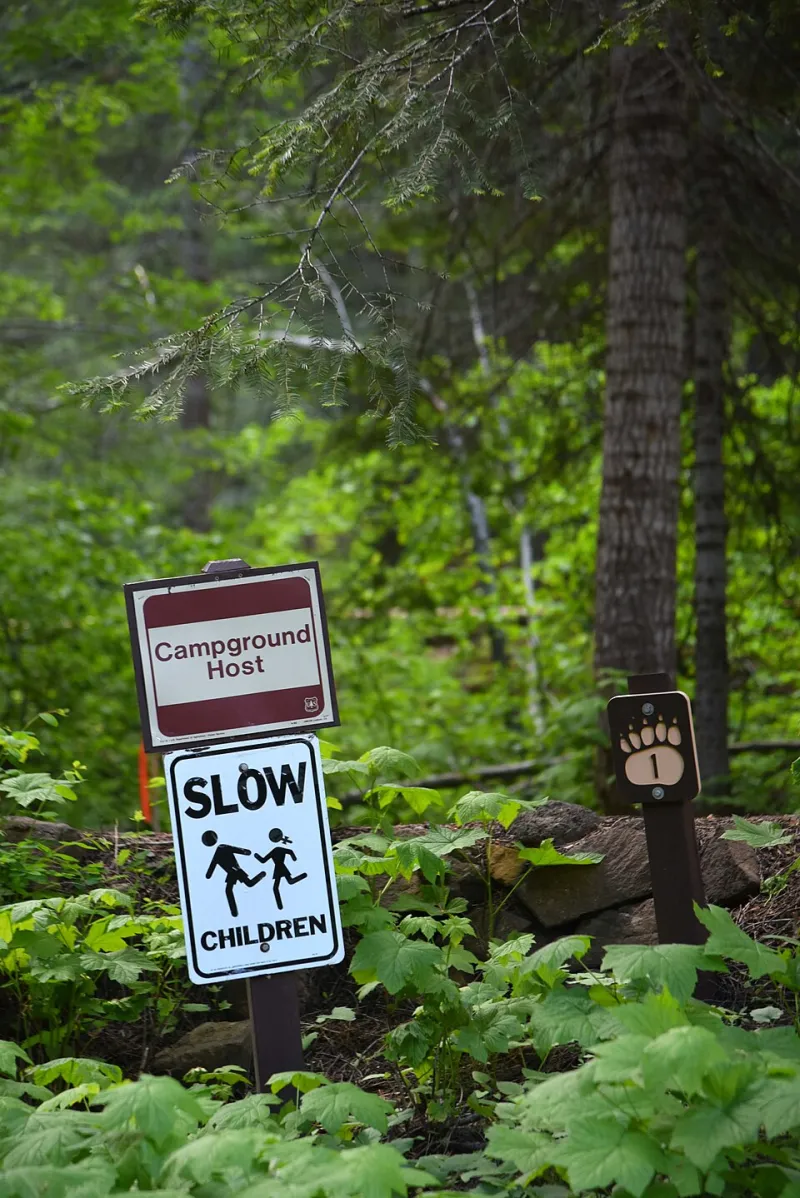
Photo: Forest Service Photography, Public domain, via Wikimedia Commons
Every spring, a certain kind of listing goes viral in the nomad groups. Free site in exchange for 20 hours a week. Full hookups. Beautiful location. Couple preferred.
It reads like a gift. And it can be. But it's also a job, and the difference between the two is where people get hurt.
I've done two seasons of hosting work on public land and one private work camping gig, and I've watched friends sign on happily in April and pack up bitter in August. What follows is the version of this conversation I wish someone had had with me before my first contract.
Run the numbers before you sign
The standard camp host arrangement trades roughly 20 to 25 hours per person per week for a full-hookup site. Do the arithmetic against what that site would actually rent for. A spot worth $50 a night is $1,500 a month. Split that across two people putting in 90 hours a week combined and you're earning somewhere near $8 an hour — with no wages, no overtime, no workers' comp, and, in most volunteer programs, no Social Security credit.
That's not automatically a bad deal. Boondockers spend real money on dump stations and laundromats, and a hookup site in a popular park in July is worth a lot more than a hookup site in February. But you should know what you're trading. If the number looks fine to you, great. If it doesn't, ask for a stipend, and ask whether it comes as a W-2 paycheck or a 1099. There's a meaningful difference at tax time, and plenty of hosts find out in April.
What the listing leaves out
The phrase and other duties as assigned deserves more respect than most of us give it.
Ask, in writing, about: the actual shift pattern and whether it changes on holiday weekends; whether you're on call overnight; who cleans the bathrooms and how often; whether you handle fee collection and cash; what happens if you get sick; whether you can leave for three days to see a dentist; whether pets are allowed and how many; and what the cell signal and power situation really look like in your specific site, not the park in general.
Ask about uniforms and whether you're expected to enforce rules on other campers. That last one matters more than it sounds. A lot of hosting work is conflict work, and some people discover they've volunteered to be the person who tells a stranger to turn off their generator. If that's not your calling, say so early.
Apply six to nine months out. Public land positions show up on the federal volunteer portal and on individual state park, county park, and Army Corps of Engineers sites. Private campgrounds and membership networks recruit year-round, often with more hours and more structure. Read every review you can find written by former hosts, not just campers.
The labor question underneath the whole thing
There's a bigger story here that rarely makes it into the glossy version. Public land budgets have been shrinking for decades, and volunteer host programs have quietly absorbed work that paid employees used to do. That's good for the agencies and good for the retirees who love it. It's less good as a national model for staffing public spaces, and it's worth being clear-eyed that you're part of a subsidy.
None of which means don't do it. It means know what you're participating in, and don't let a park talk you into 40 hours a week because you 'love the place.' Love isn't a wage.
Who actually thrives
I've noticed a pattern. The people who flourish in a stationary seasonal gig are the ones who were secretly craving routine. They want to know the ranger's name, want the same walk at the same hour, want a town where the pharmacist recognizes them and the vet can see their dog next week. Some of them are managing a health condition. Some are just tired of moving.
People also thrive when they get to be genuinely useful in a way that's visible. Leading a nature walk, teaching a kid to identify a bird, keeping the shower house from becoming a biohazard — that's concrete work with a clear result, and a lot of nomads haven't felt that in a while.
Who burns out by July
The introverts who get assigned to a front desk. The people who took the gig to escape obligations and accidentally took on a schedule. Couples where one person loves it and the other is counting days. Anyone who thought 'free site' meant 'free time.'
And anyone who didn't ask about August. Heat, crowds, and a broken water heater in a park at full capacity is a different job than the one you interviewed for in March.
What it gives back
Here's the part the math doesn't capture. A season in one place buys you something the road rarely does: depth. You learn which diner the locals use. You watch the same meadow go from green to gold. You get a mailing address for a few months and a mechanic who'll squeeze you in. Someone brings you tomatoes from their garden.
Freedom and rootedness aren't opposites. They're two settings on the same dial, and a work camping season is one of the few ways to turn the dial without selling the rig.
Just go in with your eyes open, your questions written down, and a firm internal limit on how many hours you're willing to trade for a patch of gravel with a hookup. You're not getting a free site. You're buying a summer. Make sure the price is one you'd actually pay.