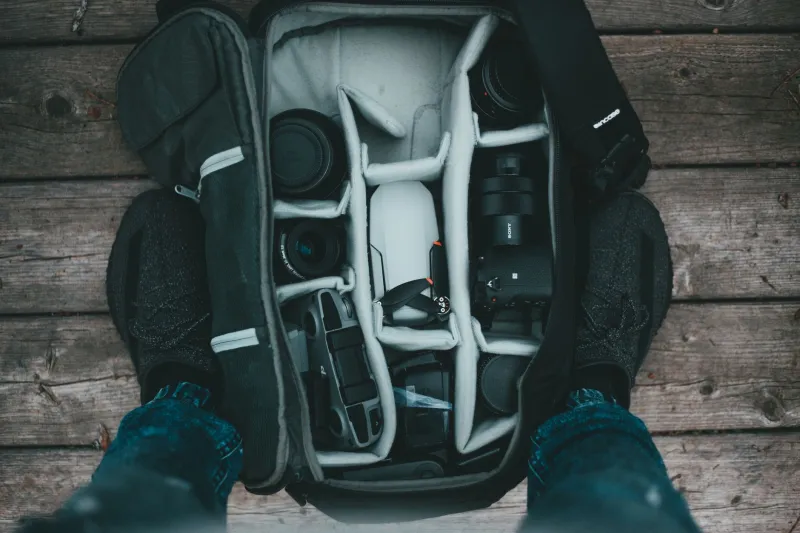
Everything You Packed Was a Hypothesis — Here's What Actually Survived the Road
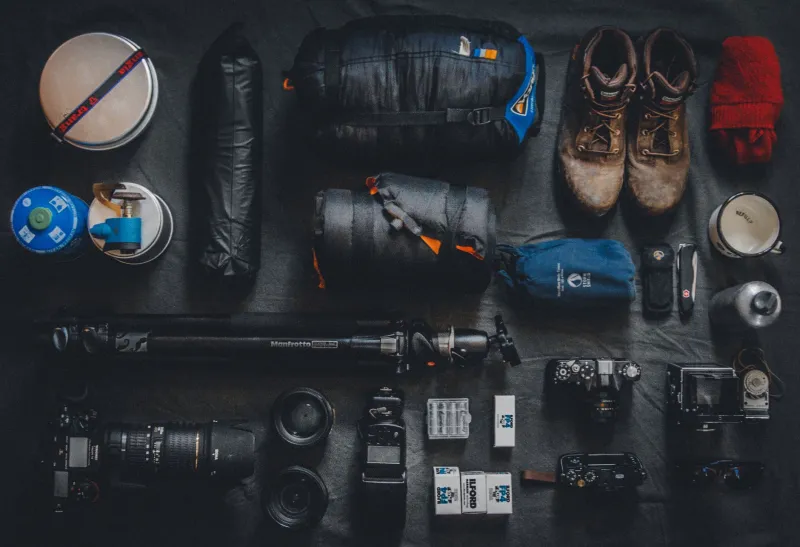
Here's a truth nobody puts on a travel influencer's highlight reel: the first version of your nomad pack is basically a collection of anxiety in stuff form.
You've got the backup charger for your backup charger. A full toiletry kit like you're checking into a Marriott every night. Three pairs of shoes for every possible social scenario — casual, dressy, and what you call "adventure," which really means you paid too much for a boot you'll wear twice. You stand in your living room surrounded by it all, doing the mental math, and convince yourself every single item has earned its place.
Then you actually leave.
And somewhere around week two, probably in a laundromat in Asheville or a hostel parking lot in Moab, it hits you. You've touched maybe 40 percent of what you brought. The rest has just been riding along for the experience.
The Pre-Trip Mind Is Not Your Friend
Packing for an open-ended trip is a psychological event as much as a logistical one. Your brain, wired for worst-case scenarios, starts generating "but what if" questions faster than you can answer them. What if there's a fancy dinner? What if it gets cold? What if I need to look professional? What if, what if, what if.
This is survival instinct doing its thing — just in completely the wrong context. Your ancestors needed to anticipate danger. You're packing for a road trip to the Pacific Coast Highway.
The pre-trip mind confuses preparedness with security. It believes that if you bring enough stuff, you're covered. What it doesn't account for is the weight of all that coverage — literal and psychological — once you're actually moving.
Most veteran nomads will tell you the same thing: the first trip is always overpacked. Not because you're bad at this, but because you haven't yet run the experiment. You don't know what you actually use until you go without the option of grabbing it from a closet.
The Brutal Audit That Happens Naturally
Spend three months on the road and your pack will sort itself out, whether you intervene or not. You'll naturally stop reaching for things. You'll start stuffing a certain jacket to the very bottom every single time because you always grab the other one. Your "just in case" items will stay zipped in a dry bag for so long you'll forget they exist.
This is what nomads call the audit, and it's merciless.
A useful exercise some long-term travelers swear by: at the end of each week, flip a mental coin on every item you didn't touch. Could you have managed without it? Would you have figured something out? Usually the answer is yes. Usually the road has a way of providing — a borrowed tool, a corner store, a creative workaround — that your pre-trip brain never considered because it was too busy catastrophizing.
The things that survive the audit? Those are your actual essentials. Everything else was just fear wearing the shape of a stuff sack.
The Gear That Always Makes the Cut (And the Stuff That Never Does)
Ask a hundred nomads what they'd never leave behind, and patterns emerge fast.
A quality lightweight layer — not three of them, one great one — almost always makes the list. A versatile pair of shoes that can handle a hike and a bar on the same day. A small first aid kit that's actually been curated, not just the drugstore grab-bag. A reliable power bank. A journal or something analog that doesn't need a signal.
Now ask what they'd never pack again.
The "nice" outfit that's too precious to actually wear anywhere spontaneous. The full-size bottles of anything. Books — physical ones, plural. The laptop stand, the ring light, the portable espresso maker. The stuff that made the bag feel like a home office or a hotel room, because that's exactly what it was trying to replicate.
The pattern is obvious once you see it: the things nomads ditch are almost always comfort objects. Items that exist to make the road feel more like the life they left behind. And the revelation — the one that hits like a quiet thunderclap — is that you didn't need the simulation. You needed the road itself.
Test Your Attachment Before You Commit to the Road
You don't have to wait until you're three states from home to start figuring this out. There's a low-stakes version of the audit you can run right now.
The 30-Day Exile Test. Box up everything you're considering bringing — clothes, gear, gadgets — and live out of that box for a month without accessing anything else. Whatever you never opened? Strong candidate for the cut list.
The One-Bag Weekend. Take a three-day trip with a single 25-liter pack. No exceptions, no car trunk overflow. The constraints will tell you everything. You'll discover fast what you actually reach for when the choice is made for you.
The Emotional Weight Check. Hold each item and ask honestly: am I bringing this because it's useful, or because letting go of it feels like letting go of something else? That backup blazer might really be about not fully committing to this lifestyle yet. That's useful information.
The Replace-It-on-the-Road Rule. For anything under $30, ask whether you could find it at a Target, a Walmart, or an outdoor gear shop in most American cities if you genuinely needed it. If yes, leave it. The road is not as remote from civilization as your anxiety suggests.
What Living With Less Actually Reveals
Here's the part that doesn't fit neatly into a packing guide: when you strip your possessions down to what genuinely serves you, something shifts in how you move through the world.
Decisions get lighter. You stop managing inventory and start paying attention to what's actually happening around you. You become more resourceful, more adaptable, more present — because you're not spending mental bandwidth on stuff.
There's a reason the nomads who've been doing this for years tend to pack lighter each time, not heavier. Experience teaches you that most needs are either preventable, solvable, or survivable. The road has a way of handling the gaps your bag left behind.
And here's the thing about that item you were most afraid to leave behind — the one you almost didn't go without? Odds are, you forgot about it by week three. Not because it wasn't meaningful, but because you were too busy actually living to miss it.
That's the whole experiment. That's the whole point.
Pack your hypothesis. Hit the road. Let reality do the editing.