One Burner, Whole World: The Secret Spice Tins of America's Road Cooks
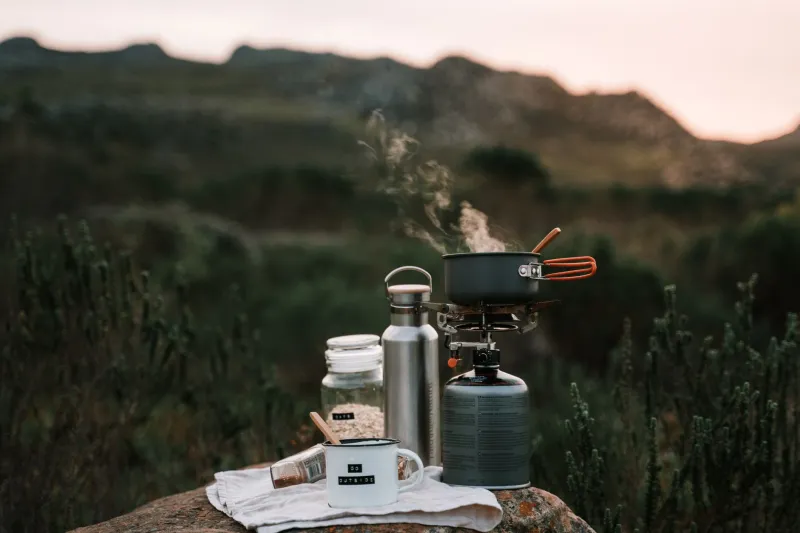
There's a moment that happens in nearly every van and RV in America. It's dusk, somewhere outside Moab or Asheville or a Walmart parking lot in Nebraska, and somebody's standing at a two-burner camp stove making the same dish their mother made in a kitchen with four times the counter space.
It never tastes exactly the same. That's the point.
The Tin That Holds Everything
Ask road cooks what they actually carry, and the answers get specific fast. Not "spices" — a system. A magnetic rack stuck to the van wall. An Altoids tin with smoked paprika, cumin, and a bag of dried chiles from a roadside stand outside Hatch, New Mexico, that they've been rationing since October.
"I've got this masala dabba my sister gave me — the Indian spice box with the seven little bowls inside," says Marisol, who's been living out a converted Sprinter with her partner for three years. "Except mine's got Cajun seasoning in one, za'atar in another, and this chili crisp I buy in bulk whenever we pass an H Mart. It's the most organized thing in my entire rig."
The spice tin becomes a portable homeland. For nomads who left a childhood kitchen two thousand miles back, it's the closest thing to grandma's cabinet that fits in a shoebox.
Where Road Food Actually Comes From
Here's what the Instagram version of van cooking never shows you: the best ingredients come from detours.
The peach stand on Highway 49 in Georgia. The Amish butter at a farmers market in Ohio Amish country. The smoked trout from a guy with a cooler in the parking lot of a bait shop outside Lake superior — the kind of transaction that takes ten minutes and turns into an hour of conversation about where you've been.
Road cooks talk about these ingredients like souvenirs, because that's what they are. The jar of local honey from Tennessee isn't just sweetener. It's that September. When they cook with it in February, parked in the snow somewhere in Utah, they're tasting a place they might never see again.
"I make this white bean stew that's different every time because it's whatever the last three towns gave me," says Deke, a retired line cook who does his cooking on a single Coleman stove. "Collard greens from South Carolina, some sausage from a butcher in Texas, corn from wherever. My grandmother would've called it cleaning out the fridge. Out here we call it the road stew."
The Dinner Table Is Wherever You Park
The family dinner table is the thing most nomads gave up — literally, since most of them sold it or left it behind. What replaced it is smaller, stranger, and sometimes better.
It's a camp chair pulled up to a fold-out table while rain drums the roof. It's a potluck in a Boondockers Welcome driveway where five rigs show up with five different versions of chili. It's teaching the new couple down the row how to keep sourdough starter alive at altitude (hint: you can't, really, but you try).
Food is how nomads build temporary villages. Arrive at any gathering of travelers and watch the social hierarchy form around who can cook. The person with the cast iron and the cast-iron confidence? They eat well everywhere they go, and so does everyone parked near them.
The Gypsy Pantry: A Shoebox Starter Kit
Want to eat like you mean it on four square feet? Start here:
- One good fat — olive oil in a squeeze bottle; butter if you've got the fridge space
- Salt, pepper, and one blend you love — Old Bay, Cajun, taco seasoning, whatever tastes like home
- Garlic powder and chili flakes — the universal fix for road-cooked everything
- A jar of something pickled — brightness for bland camp meals, and it never spoils
- Dried pasta, rice, and lentils — the holy trinity of one-pot living
- Bouillon cubes — instant flavor for anything boiled in water
- Chili crisp or hot sauce — non-negotiable
- One comfort item — the tea your mom drank, the hot cocoa from the trip you took at nine
That's it. Everything else you buy along the way, and everything you buy along the way becomes a memory with a shelf life.
Because home flavor was never really about the kitchen. It was about who was hungry at the same time you were — and out here, strangers get hungry at the same time all the time.